If you've ever gotten a paving quote and wondered why the contractor spends so much time talking about grading before the paving even starts — this is why. Grading is the foundation everything else sits on.
What "Grading" Actually Means
Grading is the process of shaping and leveling the ground surface before any paving material is applied. It involves:
- Excavation — removing soil, rock, or existing material to the required depth
- Leveling and sloping — shaping the ground to precise grades for proper drainage
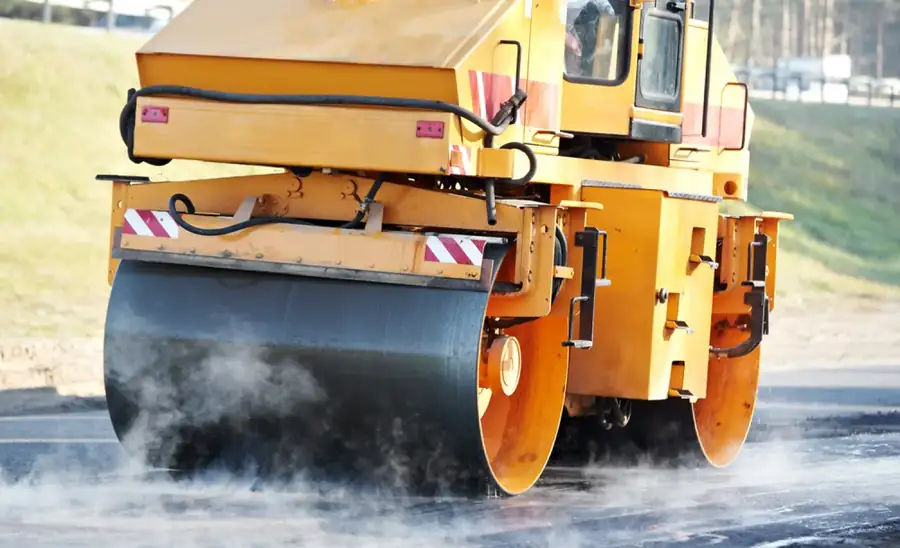
- Compaction — using heavy rollers to compress the subgrade soil to maximum density
- Base installation — adding aggregate base rock (usually 4–8 inches of 3/4" crushed stone) over the prepared subgrade
- Base compaction — rolling the base rock to achieve the specified compaction density
Why It's the Most Important Step
Industry data consistently shows that 70–80% of premature asphalt failures trace back to base problems, not surface problems. The asphalt itself is rarely the issue — it's what's underneath.
Poor grading causes:
- Drainage failure — water pools on the surface, infiltrates cracks, saturates the base, and destroys structural integrity from below
- Uneven settlement — improperly compacted soil settles unevenly, creating low spots, cracks, and eventually sinkholes in the pavement above
- Base shifting — on clay soils (very common in Sonoma and Napa), inadequate base depth allows clay movement to crack and heave the pavement above
- Premature failure — a 3-inch asphalt surface over a bad base might last 5 years; the same asphalt over a properly graded base lasts 25 years
The most expensive mistake in paving: Skipping or shortcutting base prep to save money upfront. A $2,000 reduction in base work can easily cost $15,000–$30,000 in early replacement.
Bay Area Soil Challenges
Sonoma and Napa Valley Clay
The valley floors of Sonoma and Napa counties are dominated by Yolo, Clear Lake, and Pleasants clay soils — all highly expansive. When wet, these soils swell significantly. When dry, they shrink and crack. This movement telegraphs through any base that isn't deep enough or well-drained enough to isolate the pavement from soil movement.
Standard practice in these areas: excavate deeper (6–8 inches of base instead of 4), sometimes add geotextile fabric to prevent base contamination from clay below, and ensure drainage is well-designed.
Hillside Properties
Sonoma and Marin county hillside properties face a different challenge: slope stability and erosion management. Grading on slopes must be done carefully to maintain drainage while preventing erosion or soil movement that could undermine the pavement.
What Proper Grading Looks Like
- Existing surface removal (if applicable)
- Excavation to required depth (typically 8–12 inches below finished surface)
- Subgrade compaction to 95% modified Proctor density
- Aggregate base installation (4–8 inches depending on soil and load)
- Base compaction with nuclear density testing (for commercial)
- Final grade check with laser level before paving begins
When you see a contractor spending a day or more on prep before any asphalt is placed — that's exactly right. That prep work is what you're paying for when you invest in a quality paving job.
Ready to Get Started?
Free estimates, no obligation. Serving Sonoma, Marin & Napa Counties.
Request Free Estimate → (707) 529-8559