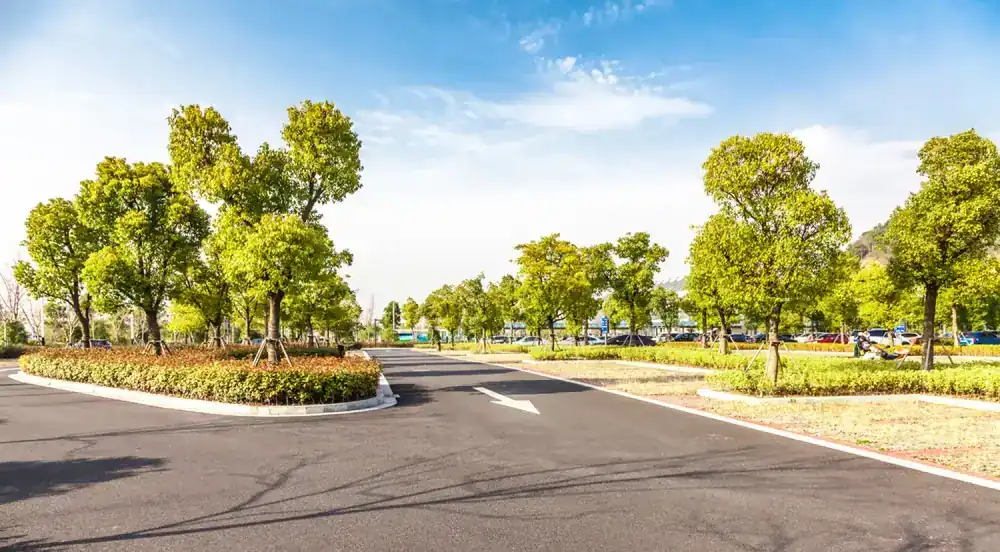
Asphalt in Northern California outlasts asphalt in freeze-thaw climates by a wide margin. Here's what you can realistically expect — and the maintenance that separates a 15-year pavement from a 30-year one.
Expected Lifespan by Application
| Application | With Maintenance | Without Maintenance |
|---|---|---|
| Residential driveway | 25–35 years | 12–18 years |
| Commercial parking lot | 20–30 years | 10–15 years |
| Private road (light traffic) | 20–30 years | 12–18 years |
| High-traffic commercial | 15–25 years | 8–12 years |
Northern California Climate: What Works in Your Favor
Unlike the Midwest or Northeast, Sonoma, Marin, and Napa Counties don't experience severe freeze-thaw cycles. Frozen water expanding in pavement cracks is one of the leading causes of asphalt failure — and you largely avoid that here.
What you do get:
- UV oxidation — California sun dries out the binder (the oil in asphalt) over time, making the surface brittle
- Winter moisture — water infiltrating cracks weakens the base and causes potholes
- Clay soil movement — common in Sonoma and Napa valleys; clay expands and contracts with moisture, stressing the pavement from below
The Maintenance Schedule That Doubles Lifespan
Year 1–3: Let It Cure
New asphalt needs time to fully harden. Avoid seal coating for the first 6–12 months. During this period, the oils in the asphalt are still evaporating and compacting.
Year 2–4: First Seal Coat
Once cured, asphalt sealing is the single best investment you can make. It replenishes the binder oils, blocks UV rays, and waterproofs the surface. Cost: $0.15–$0.25/sq ft. Return: potentially doubles pavement life.
Every Year: Crack Filling
Cracks wider than 1/4 inch should be filled annually before the rainy season. Water in cracks freezes (even minimal freezing at elevation), erodes the base, and turns small cracks into potholes. Crack filling is cheap; pothole repair or repaving is not.
Every 3–5 Years: Re-seal
After the initial seal, plan to re-seal every 3–5 years depending on traffic and sun exposure. Coastal properties exposed to salt air should seal every 3 years.
Year 15–20: Overlay Evaluation
Around this point, evaluate whether a 1.5–2 inch overlay extends life or whether you're better off with full replacement. Key question: is the base still structurally sound?
Rule of thumb: Every $1 spent on seal coating and crack filling saves $5–$8 in future repair and replacement costs. It's the highest-ROI maintenance activity for any paved surface.
Warning Signs Your Asphalt Is Failing
- Alligator cracking (interconnected cracks in a grid pattern) — indicates base failure, not just surface aging
- Sinking or heaving — base has failed or soil settlement is occurring
- Potholes that keep returning — surface patching won't fix a base problem
- Standing water after rain — drainage issue that accelerates all other damage
- Surface crumbling / aggregate loosening — binder has fully oxidized, seal coating is too late
Ready to Get Started?
Free estimates, no obligation. Serving Sonoma, Marin & Napa Counties.
Request Free Estimate → (707) 529-8559